



Understanding the Principle: Necessity Permits the Prohibited
In Islamic jurisprudence, the maxim al-darurah tubih al-mahzurat (“necessity permits the prohibited”) allows actions normally forbidden if they are required to prevent significant harm or preserve life. This principle provides flexibility in Shariah, particularly in medical ethics, enabling Muslims to engage in life-saving practices, including organ donation, under exceptional circumstances.
Quranic and Hadith Foundations
The Quran acknowledges human limitations and the need for flexibility: “Allah intends for you ease and does not intend for you hardship” (Surah Al-Baqarah 2:185). This guidance supports the allowance of otherwise restricted actions when necessity is present. The Hadith further emphasizes avoiding harm and prioritizing benefit in challenging situations (Sunan Ibn Majah 14:13).
Application to Organ Donation
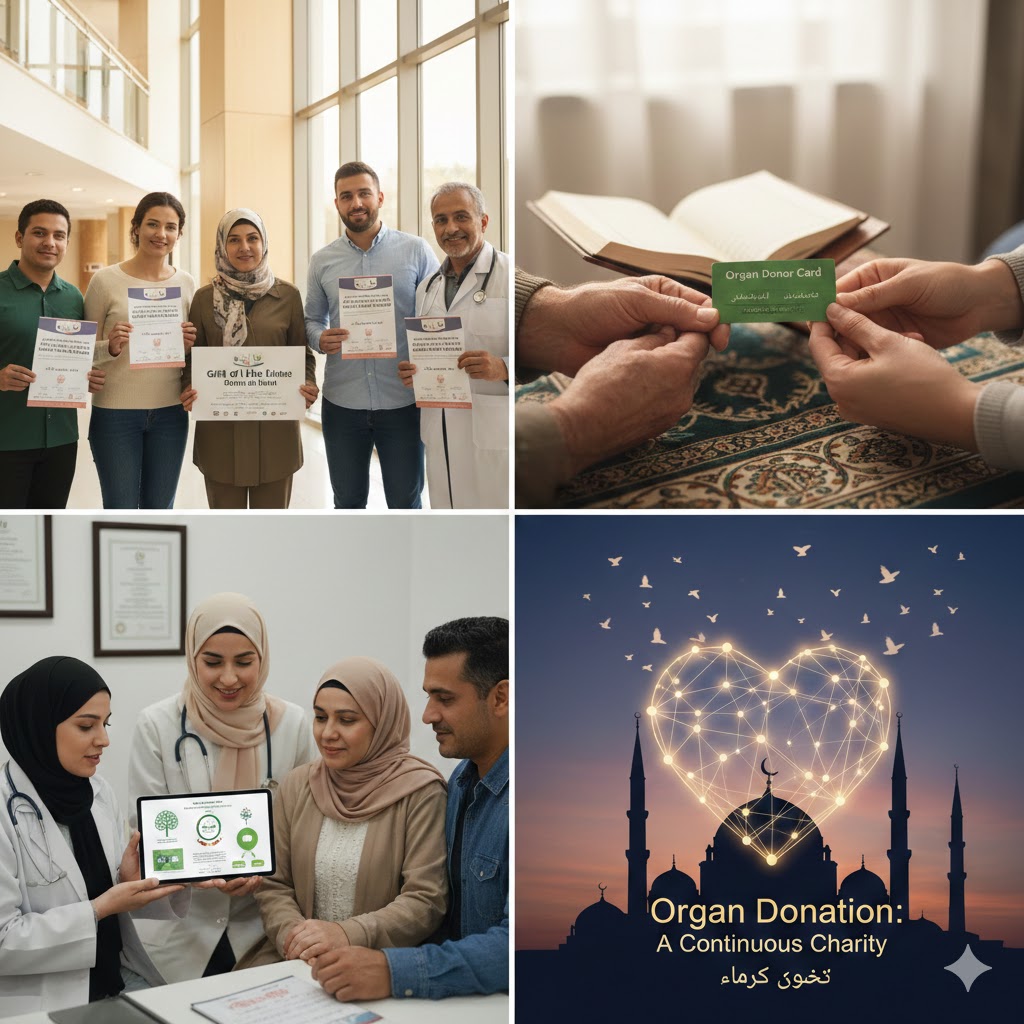
Organ transplantation often involves decisions that would normally be restricted due to concerns about bodily integrity or altering the human body. However, when a patient’s life is at risk, necessity permits actions like removing organs from a living or deceased donor. This maxim ensures that preserving life takes precedence over minor prohibitions.
Medical Necessity and Ethical Oversight
In living organ donation, a donor may undergo surgery to save another’s life. Ethical guidelines and medical evaluation ensure that the procedure is safe, risks are minimized, and the action is justified under necessity. Posthumous donations follow similar principles, ensuring family consent, dignity of the deceased, and alignment with Shariah.
Scholarly Opinions
Classical jurists and contemporary scholars consistently invoke this maxim in medical ethics. Organizations like the Islamic Fiqh Academy confirm that organ transplantation is permissible when necessity is involved, as the act saves life and serves public interest. Scholars emphasize that ethical and medical standards must be maintained to prevent abuse or exploitation.
Balancing Necessity and Ethics
The principle of necessity does not allow indiscriminate violation of Shariah rules. Medical teams and religious authorities work together to ensure that organ donation occurs only when truly necessary, that harm is minimized, and that procedures follow strict ethical protocols. This balance preserves life while maintaining religious integrity.
Practical Examples
Consider a patient with liver failure. Without a transplant, the patient faces imminent death. Removing a compatible portion of a living donor’s liver is normally risky and ethically sensitive, but necessity allows it if performed safely and with consent. Similarly, retrieving organs from a consenting deceased donor is permissible when it saves multiple lives.
Conclusion
The maxim “necessity permits the prohibited” demonstrates the flexibility and compassion of Islamic law. It allows Muslims to participate in organ donation ethically, prioritizing the preservation of life over minor prohibitions. Through careful assessment, informed consent, and Shariah-compliant medical practices, necessity ensures that life-saving organ transplantation is permissible, responsible, and morally commendable.