




Classical Definition of Death in Islamic Tradition
In classical Islamic scholarship, death was traditionally recognized by observable physical signs such as the cessation of heartbeat and breathing. Since advanced medical life-support systems did not exist in earlier centuries, jurists relied on outward signs to determine when the soul had departed the body. This historical framework shapes modern debates about whether brain death fulfills the Islamic definition of death.
The Emergence of Brain Death as a Medical Concept
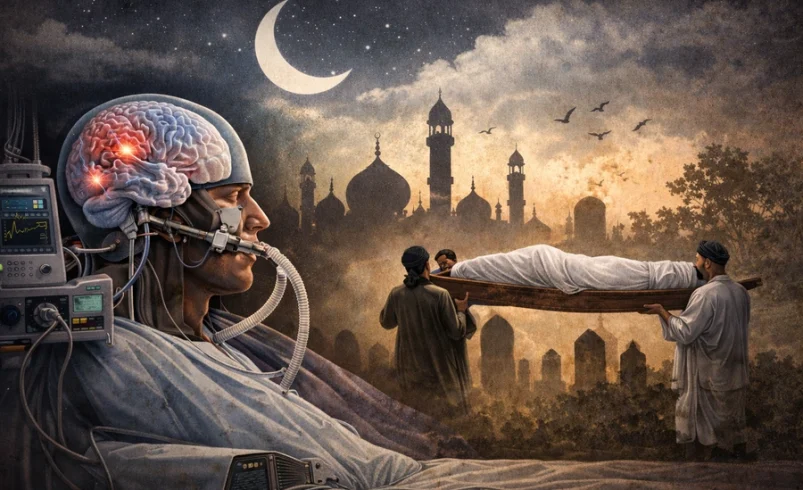
Modern medicine introduced the concept of brain death in the twentieth century. It refers to the irreversible cessation of all brain activity, including the brainstem, which controls breathing and reflexes. Although machines may maintain circulation temporarily, the person has permanently lost consciousness and the capacity for independent life. This development required contemporary scholars to reexamine traditional legal definitions.
Quranic Perspective on Life and Death
The Quran describes death as a divinely ordained moment known fully only to God (Surah Az-Zumar 39:42). While the spiritual departure of the soul is beyond human observation, Islamic law requires practical criteria to determine death in worldly matters. Scholars therefore assess whether irreversible brain failure sufficiently indicates that the soul has departed.
Scholarly Opinions Supporting Brain Death
Many contemporary Islamic juristic councils recognize brain death as legitimate death when confirmed by reliable medical experts. Institutions such as the Islamic Fiqh Academy have issued resolutions accepting brain death under strict medical criteria. These scholars argue that when all brain function permanently ceases, the individual no longer possesses the integrated bodily function associated with life.
Scholarly Reservations and Caution
Some scholars remain cautious. They argue that as long as the heart continues beating with mechanical support, the person cannot definitively be declared dead. Their concern centers on avoiding premature termination of life. Since preserving life is a primary objective of Shariah, any uncertainty must be resolved carefully before accepting brain death as equivalent to cardiopulmonary death.
Conditions for Acceptance
Those who accept brain death emphasize strict safeguards. Diagnosis must be made by multiple qualified physicians. Reversible causes such as hypothermia, intoxication, or drug effects must be excluded. Confirmatory tests must demonstrate total and irreversible cessation of brain activity. Only when medical certainty is achieved can brain death be recognized within an Islamic legal framework.
Implications for Organ Donation
The recognition of brain death directly impacts organ transplantation. If brain death is accepted as legitimate death, posthumous organ donation becomes permissible under specific conditions. The Quran highlights the immense value of saving life: “Whoever saves a life, it is as if he has saved all of humanity” (Surah Al-Ma’idah 5:32). Many scholars view transplantation through this ethical lens while maintaining strict procedural safeguards.
Balancing Certainty and Compassion
Islamic jurisprudence seeks balance between certainty (yaqin) and compassion (rahmah). Recognizing brain death requires confidence that life has truly ended, yet it also acknowledges the opportunity to save others through transplantation. Scholars continue to evaluate emerging medical evidence to ensure that rulings remain grounded in both scientific reliability and religious integrity.
Conclusion
The question of whether brain death constitutes death in Islam reflects the dynamic interaction between tradition and modern medicine. While classical definitions focused on heartbeat and breathing, many contemporary scholars accept brain death when strict medical criteria are met. Others remain cautious to protect the sanctity of life. Ultimately, Islamic legal discourse continues to prioritize certainty, dignity, and the preservation of human life in navigating this complex issue.